

Ordering envelopes sounds simple until you are actually asked to specify one. Window or non window? DL or C5? Peel and seal or gummed? For anyone placing an order without a print background, these small decisions can feel surprisingly difficult to get right.
This guide is written for business owners, office managers and admin staff who need to order envelopes and want to get the specification right the first time. It covers the main choices you will be asked to make, what they actually mean, and when it makes sense to move from a plain, off the shelf envelope to a custom printed one.
Window vs Non Window Envelopes
The first decision most people face is whether they need a window in the envelope. It sounds minor, but it affects everything from how you print your documents to how quickly mail gets processed.
Window Envelopes
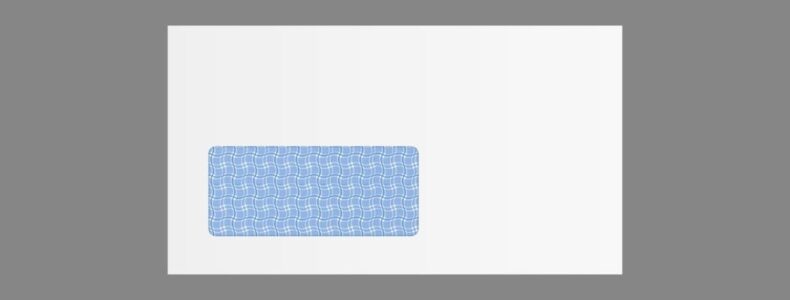
A window envelope has a clear panel, usually made from glassine or a similar transparent film, positioned so the recipient’s address on the letter inside shows through without needing to be printed on the envelope itself.
This is useful for invoices, statements and any document produced through an automated mail merge, since the address only needs to be printed once, on the letter, rather than twice.
Window position matters more than most people expect. Australia Post’s addressing guidelines set out a specific address zone located roughly in the centre of the envelope, with a service zone reserved for things like a return address or advertising material. If a window is positioned even a few millimetres out of place, or the letter inside shifts during folding, the address can end up partly hidden or misaligned, which slows down delivery or causes it to be returned. Recommended minimum window sizes are around 38mm high by 95mm wide for envelopes up to C5, and slightly larger again for bigger envelopes.
Non Window Envelopes
A non window, or plain, envelope has no clear panel. The address needs to be printed or handwritten directly onto the front. These work well for personalised correspondence, greeting cards, and anything where a printed address on the envelope itself looks more considered, such as invitations or thank you letters.
Non window envelopes also give you a full, uninterrupted surface for a printed design, which matters if branding or presentation is a priority. There is no window placement to worry about, and no risk of a shifting letter obscuring the address.
Understanding Envelope Sizes
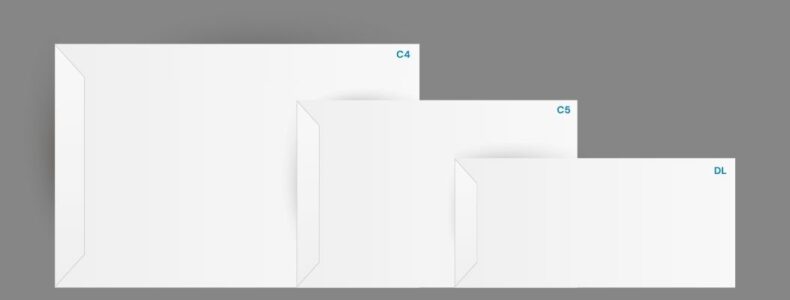
Envelope sizes in Australia generally follow the international C series system, which is designed to match the A series paper sizes used in most offices. Getting the size right affects not just fit, but postage cost, since Australia Post classifies letters by size as well as weight.
DL: The Standard Business Envelope
The DL envelope, at 110mm by 220mm, is the most common size for everyday business correspondence. It is designed to hold an A4 sheet folded into thirds, and as long as the contents stay under about 5mm thick and 250 grams, it qualifies for the cheaper small letter postage rate. This makes DL the default choice for letters, invoices and general mail outs.
C5: A Middle Ground
The C5 envelope, at 162mm by 229mm, holds an A4 sheet folded once in half, or an A5 sheet unfolded. It needs fewer folds than a DL, which suits documents people will read as soon as they open the envelope, certificates, formal letters or anything where extra creases look untidy. Because of its width, a C5 is classed as a large letter for postage purposes even when it is nearly empty, so it costs more to send than a DL.
C4: For Documents That Should Not Be Folded
The C4 envelope, at 229mm by 324mm, holds a full A4 sheet with no folding at all. This is the right choice for legal correspondence, certificates, contracts or anything where creasing the document is not acceptable. C4 always falls into the large letter postage category.
Other Sizes Worth Knowing
C6 envelopes suit smaller items such as compliment slips or A4 sheets folded twice. B series envelopes sit between C series sizes and are useful when you need a little extra room around the contents. Square envelopes fall outside the standard ISO system entirely and are generally reserved for invitations and greeting cards.
What to Specify When Ordering.
Once you know your size and window requirements, a few other details make a real difference to the finished product.
Paper weight. Standard office envelopes are usually printed on lighter stock, while anything mailed with heavier contents, or intended to look more premium, benefits from a heavier gsm.
Seal type. Peel and seal envelopes work well for smaller runs, since there is no need to lick or moisten a gummed strip. For genuine high volume mail outs, gummed envelopes are usually the right choice, since automatic envelope inserters are built to moisten and press down a gummed seal as part of the machine process, rather than working with a peel and seal strip.
Print detail. Decide whether you need a logo, return address, or both pre-printed on the envelope, and how many colours that print will use. This is where a plain, generic envelope starts to look noticeably different from one that has been set up properly for your business.
Security tint. For anything containing sensitive information, payslips, financial statements, medical correspondence, a printed pattern on the inside of the envelope prevents the contents being read through the paper when held up to light.
When Custom Printing Pays Off.
A plain envelope from a stationery supplier will get a letter from A to B. A custom printed envelope does a bit more work for your business along the way.
Consistent branding. A logo and colour scheme on the envelope reinforces your brand before the recipient has even opened it, which matters for the first impression a piece of mail creates.
Time saved on admin. Pre-printing your return address and logo removes a manual step for whoever is packing and sending mail, which adds up quickly across larger mail runs.
A more professional look for sensitive mail. Certificates, contracts and formal notices tend to be taken more seriously when they arrive in a properly branded, well printed envelope rather than a plain one.
Common Mistakes to Avoid.
A few recurring issues come up when businesses order envelopes without much prior experience.
Choosing the wrong window position for the address layout. If your letter template does not line up with where the window sits, the address can be cut off or sit awkwardly, which risks delivery problems.
Not checking postage category before ordering. A slightly larger envelope, even an empty or lightly filled one, can tip a letter into a more expensive postage tier. Checking Australia Post’s small and large letter thresholds before settling on a size can avoid an unwelcome surprise on postage costs down the track.
Underestimating paper thickness. Folded contents that are thicker than expected can push an envelope over the size or weight limit for its intended postage category, or simply make it awkward to seal properly.
Practical Takeaways.
- Choose window envelopes for automated mail outs and invoices, and non window envelopes for personalised or branded correspondence.
- Match your envelope size to your document, DL for standard folded letters, C5 for documents folded once, C4 for anything that needs to stay flat.
- Check Australia Post’s small and large letter size and weight limits before finalising your envelope choice, since size alone can shift a letter into a more expensive postage tier.
- Specify paper weight, seal type and print detail clearly when ordering, rather than assuming a supplier’s default will suit your needs.
- Consider a security tint for anything containing sensitive or confidential information.
- Move to custom printed envelopes once your volume and frequency make the admin time and branding benefit worthwhile.
Getting these details right the first time saves reprints, avoids postage surprises, and gives your correspondence a more professional finish from the moment it lands in someone’s hands.
If you are weighing up your options, AAA Print Group can help you specify the right envelope for your job and produce custom printed runs, large or small, to suit your branding and budget.

Sources
- Australia Post, Addressing guidelines: auspost.com.au/sending/guidelines/addressing-guidelines
- Australia Post, Envelope zones: auspost.com.au/sending/guidelines/addressing-guidelines/envelope-zones
- PostMyDoc, How to Send a Letter in Australia, for small and large letter size and weight thresholds: postmydoc.au/how-to-send-a-letter-in-australia
- Glide Print, Guide to Australia Post Preferred Envelopes, for recommended window panel sizes: glideprint.com.au/guide-to-australia-post-preferred-envelopes
Let’s Work Together.
Backed by nearly 50 years of industry experience, we’re ready to support your business with strategic solutions designed to make an impact.
Our Clients.











































































Ready to Find the Right Print Solution for Your Business?
Take your business further with print solutions that work. Contact us today to see how we can boost efficiency, safety, and brand impact.